
Study in Poland
Tuition, visas, work rights, and settlement options explained.
Book free consultationWhy You Should Study In Poland
Poland has quietly become one of the most practical European study destinations for African students who want an EU degree without Western European price tags. Warsaw, Krakow, Wroclaw, and Poznan all have well-established universities, a growing number of English-taught postgraduate programmes, and living costs that are significantly lower than anything in Germany, France, or the Netherlands.
As a full EU member and Schengen state, Poland carries the same long-term mobility benefits as its more expensive neighbours. The honest context worth knowing upfront: post-study work rights exist but are less clearly structured than in Western Europe, and the immigration experience for African students in Poland has been variable. Neither of those things makes Poland the wrong choice, but they are the things a well-prepared student plans around, not discovers on arrival.
This page helps you understand what studying in Poland actually requires before you commit.
This page helps you decide:
- Which Polish cities and universities have programmes that match your field and level
- What the real cost difference looks like between Warsaw and the more affordable student cities
- What post-study work rights exist and what conditions are attached to staying after graduation
- How the student visa process works for Nigerian applicants and what documents you will need
- Whether Poland's EU membership creates a viable long-term immigration pathway for your situation
Who Poland is best for

Solo student
Poland is a strong, affordable entry point into EU-accredited education with English-taught options and a low cost of living. You can build a full European student experience here without the financial pressure of Western Europe.

Student moving with dependants
Poland's lower cost of living makes it more manageable than Western Europe for students supporting a family. Dependant residence is possible, though documentation requirements are substantial.

Career switcher
If you are using a postgraduate degree to move fields, Poland's lower fees mean you take on less financial risk while gaining an internationally recognised EU qualification.

Long-term settlement seeker
EU membership means the Blue Card pathway is available to graduates who secure qualifying employment. Poland is a viable base for building toward long-term EU residence, particularly in STEM and business fields.
What it actually costs
Tuition
Most English-taught programmes at Polish public universities cost between €2,000 and €4,500 per year. Private universities and medical programmes can run €5,000 to €15,000 per year (subject to change, verify with individual universities).
Proof of funds
Polish authorities generally require students to demonstrate access to approximately PLN 3,000 to PLN 4,000 per month (roughly €700 to €950), though the precise figure can vary by regional office and application context (subject to change, verify with the relevant Polish consulate before applying).
Visa fee
The Polish national visa (Type D) costs approximately €80. The temporary residence permit, applied for after arrival, carries a stamp duty of approximately PLN 340 (around €80) (subject to change). Visa processing times: Processing times vary depending on nationality and time of application and can take several weeks to a few months. Apply at least two to three months before your intended travel date and ensure all documents are complete on first submission.
Monthly living costs
Warsaw is Poland's most expensive city, with students typically spending €800 to €1,200 per month including accommodation, food, and transport. Krakow is meaningfully more affordable at €650 to €950 per month, and offers a large international student community alongside strong academic options. Wroclaw and Poznan sit in a similar range of €580 to €880 per month and are worth serious consideration for students who want to reduce costs without compromising on university quality.
Note: We'll confirm your exact budget based on your city, school, and family size during your consultation.
Key things to note
- Post-study work requires a job offer. There is no dedicated graduate job-seeker visa. Staying after graduation depends on securing employment and an employer-initiated permit.
- The EU Blue Card is the clearest long-term pathway. Graduates employed in qualifying roles can apply for the Blue Card, which leads to long-term EU resident status.
- Schengen membership applies in full. A valid Polish residence permit allows free movement across 26 Schengen states for short stays.
- Intake periods are typically October and February. Application deadlines for October entry are generally May to July, though this varies by institution.
Schools / regions
Warsaw
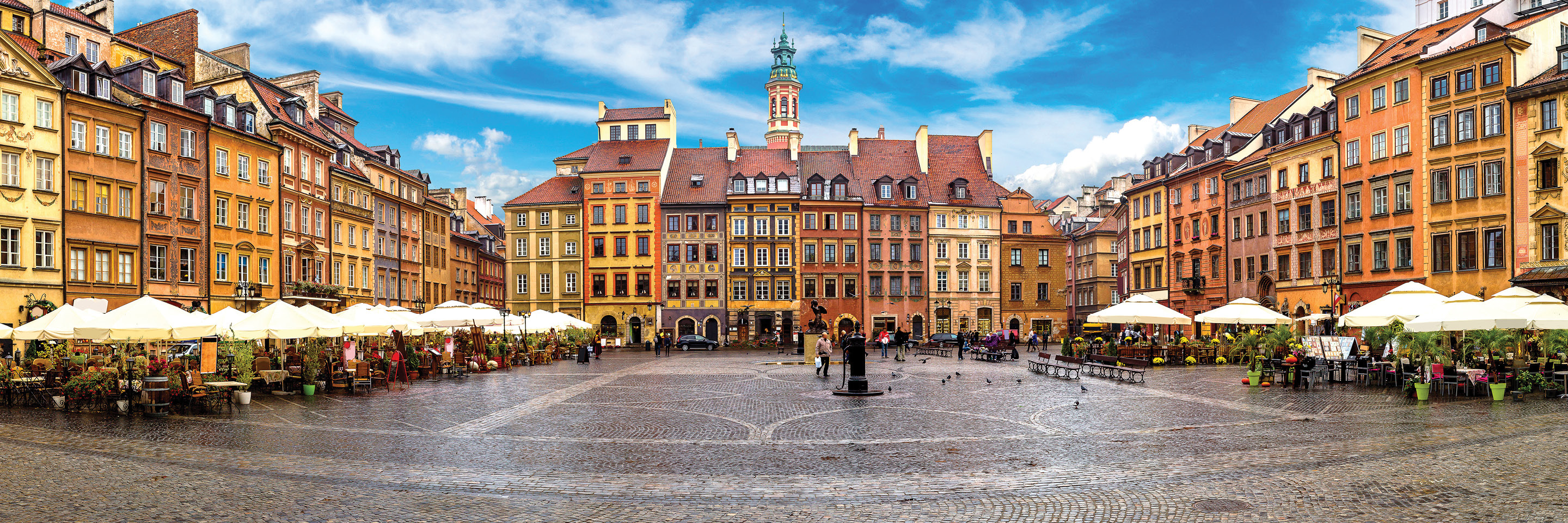
Poland's capital is its most internationally connected city, home to the University of Warsaw, Warsaw University of Technology, and SGH Warsaw School of Economics. The tech and finance sectors are growing fast and internship access is the strongest in the country. It costs more than other Polish cities, but the professional network justifies it for students who plan to work here after graduation.
Krakow
Krakow is Poland's cultural capital and a major student hub, anchored by the Jagiellonian University and AGH University of Science and Technology. It has a large international student community, a lively atmosphere, and costs noticeably lower than Warsaw. A strong all-round choice for most postgraduate students.
Wroclaw
Wroclaw has built a strong reputation in engineering and technology through Wroclaw University of Science and Technology, with a growing startup scene and proximity to the German border. Costs are lower than both Warsaw and Krakow, making it an attractive option for students thinking about the broader European job market.
Poznan
Poznan has a practical, commercially oriented atmosphere anchored by Poznan University of Economics and Business and Adam Mickiewicz University. It is one of the most affordable major student cities in Poland and offers solid access to Polish and European corporate networks in business, economics, and logistics.

How Shuri supports you end-to-end
Timeline:
Profile review (budget, background, dependants, timelines)
Country and school pathway planning
Document and application support
Visa readiness and submission guidance
Pre-departure planning (housing, guidance and initial plan)
Profile review (budget, background, dependants, timelines)
Country and school pathway planning
Document and application support
Visa readiness and submission guidance
Pre-departure planning (housing, guidance and initial plan)
Are you ready to plan this properly?
We help you choose the right country, school and pathway based on your real situation.
Book a Free Consultation